If you are looking at Italian properties, it is important to be aware of the cadastral categories that are used. A few categories fall under “luxury.” These are particularly nice, large, or otherwise significant properties. While they can be appealing for a number of reasons, it is important to learn about the implications of purchasing such a place. We discuss this in more detail in the article below.
How is a luxury property classified
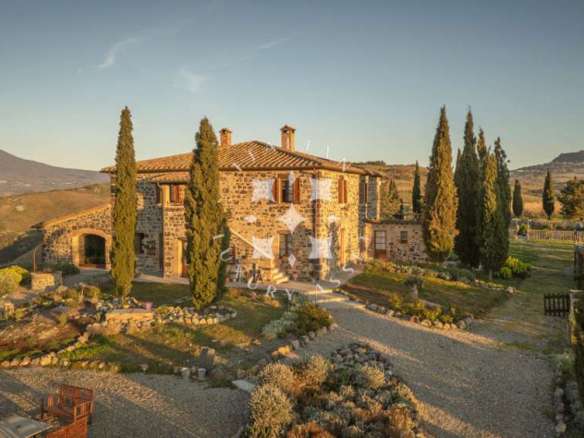
The initial Ministerial Decree of August 2nd, 1969 declared a luxury property as one with a surface area exceeding 240 sqm, excluding certain exterior spaces, such as balconies, attics, and cellars. In 2014, with Legislative Decree 175/2014 art. 33, the surface area no longer became the defining characteristic of luxury properties; they were determined as ones that fit in certain cadastral categories. Specifically, these are categories A1, A8, and A9. A1 are very nice apartments, A8 are villas, and A9 are castles or historically noteworthy buildings. There are some exceptions to these classifications, but it is rare. Even the use of certain materials to build the place, if particularly nice, can contribute to the classification of “luxury.”
@ Comune di Pietrasanta website
The most expensive places to purchase property in Italy
You can find luxury properties all around Italy, so it is worth noting first that a place with a high cost of living does not mean it is your only option for luxury properties. However, some of these places might have more luxury properties than others, so you might want to consider the following areas, some of which we have already discussed in more detail:
Forte dei Marmi and Pietrasanta are two coastal treasures in Tuscany that have consistently been listed as the most expensive places to purchase property for the past few years. Lucca, the closest city to these places, has also been rising in popularity among expats in recent years. It is beautiful, with plenty of historical and artistic sites worth exploring. You can also walk or bike along the city’s walls. Or you can simply relax in the unique Piazza dell’Anfiteatro with an aperitivo at one of the many bars and restaurants that line the oval-shaped square.
Another place worth looking into is San Benedetto del Tronto in the Marche region. Perhaps its most notable feature are the 7,000+ palm trees that line the stretch of road along the sea. The beach there has the prestigious Blue Flag, and there are nice shopping opportunities and museums too.
If you are considering a luxury property, it is important to consider where it is located. As this section has demonstrated, there are places in Italy known for being more expensive (Forte dei Marmi and Pietrasanta), along with places rising in popularity (Lucca). But those are not the only considerations. You should also be aware of what amenities are available in your chosen area, as well as what kind of topography you would prefer.
The purchase process
Upon finding your dream property, you will need to begin with a purchase offer (proposta d’acquisto). This will stipulate the amount you will offer for the property, along with other details such as the dates of the preliminary contract and final deed of sale. The seller will have around 10 days to sign and accept this offer or counter with a different offer. Before both parties have signed, there is no obligation between them.
In between the proposal and preliminary contract, due diligence and other important checks are done on the property. It is very important to do these so that you have a clear understanding of the condition of the property so there are no surprises once you have acquired it. For this reason, be sure to hire a competent surveyor (geometra) to run checks on the property. If you are taking out a mortgage from an Italian bank, the bank will most likely send their own surveyor to look at the property as well.
The preliminary contract (contratto preliminare di vendita or compromesso) is signed next. At this point, a deposit is paid which is equivalent to around 10-20% of the property price. More specifications are given in this contract regarding the property type, identifications of seller and buyer, and when the final deed will be signed. It is important that the preliminary also be notarized and registered with the Agenzie delle Entrate, as a further safeguard to the buyer.
Then the final deed (atto di vendita or rogito notarile) is signed, notarized, and transcribed as well. If you are not able to be present in Italy for the signing of any of these documents, you can grant power of attorney to someone to do it for you. At this point, the remaining fees will be paid as well: the rest of the down payment (or full price of property, if you’re not taking out a mortgage), notary fees, and agency fees (if you used an agency).
Tax implications
Italy offers a number of appealing “bonuses” and tax breaks for property purchases, particularly if the property qualifies as a “first home.” However, these change if you are buying a luxury property. Most significantly, it cannot be classified under the first home tax regime. For example, with first homes, the registration tax is only 2% of the cadastral value of the property; in luxury homes this increases to 9%. If the property is subject to a VAT tax (usually if purchased from a company), then there will be a further 22% tax of the value owed.
Best visa options
If you are considering purchasing a luxury property in Italy and would like to live there full time, but do not have Italian citizenship, there are a few visa options available to you. One of the most popular ones for IREL clients is the Elective Residency Visa, available to those who receive a certain amount of passive income (generally retirees).
There is also the new Digital Nomad Visa, for those who work remotely, either for a company or as a freelancer. You must meet certain qualifications for this as well, such as a baseline income and being “highly qualified” in your field.
Conclusion
Purchasing a luxury property in Italy can be an appealing option for those looking for a specific kind of home, either to call a permanent residence or to use for holiday or rental. There are many things to be aware of, though, for the purchasing process and the implications you can expect from the “luxury” cadastral categories. For more information, don’t hesitate to contact us at info@italianrealestatelawyers.com.
The post Buying a Luxury Property in Italy – Your 2024 Guide appeared first on Real Estate Law Firm Italy – Italian Real Estate Lawyers.